Beat 'Em Up Collection (QUByte Classics)
Reviewed by Cyril Lachel on
.
If you’re into beat ‘em ups and want to play a bunch of thirty-year-old brawlers that you’ve probably never heard of, then the Beat ‘Em Up Collection is for you. That said, you may want to temper your expectations, because there’s nothing as good as Final Fight or Streets of Rage in this package. On the other hand, with only a couple of duds, most fans of the genre will have a good time with this collection, even though it’s a bit barebones and there are few standout games. You’re getting a lot of punch for your $20. A lot of repetitive punches. If that sounds like a good thing, then the Beat ‘Em Up Collection is worth seeking out.
Rating: 57%
Between the Teenage Mutant Ninja Turtles, Battletoads and even The Simpsons, the early 1990s was a golden time for old school beat ‘em ups. But while Americans were practically coming to blows arguing over Streets of Rage and Final Fight, there was a whole generation of brawlers released in Japan that simply never made their way to the U.S. I’m talking about 16-bit games like Gourmet Warriors, Iron Commando and Water Margin. These are just a few of the games featured in the Beat ‘Em Up Collection, the newest compilation from Brazilian publisher QuByte. It’s a fun trip back to a time when you could base a whole game around punching people in the face. But do any of these games hold up? That’s what we’re about to find out when I review the Beat ‘Em Up Collection.
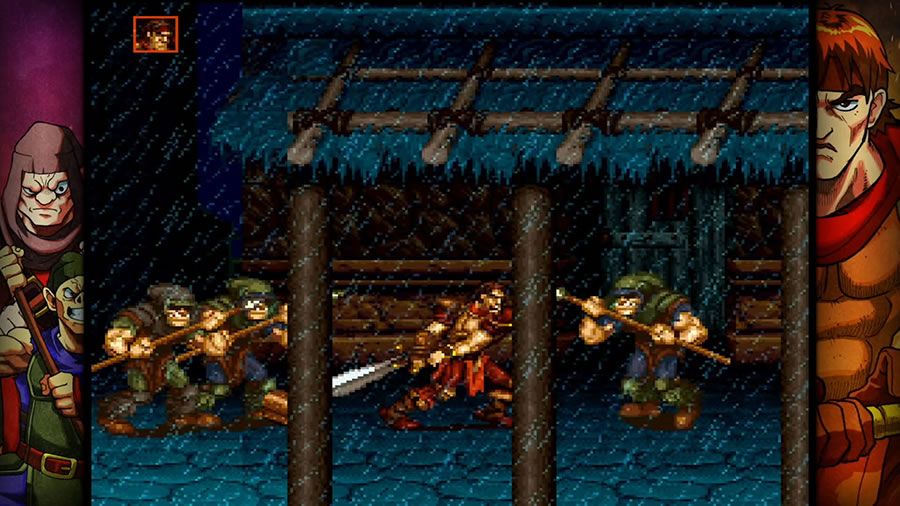
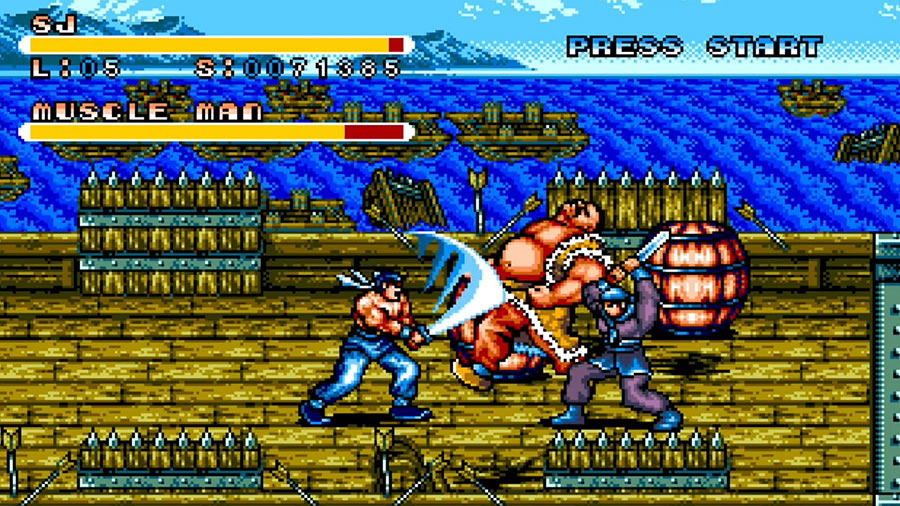
True to its name, the Beat ‘Em Up Collection features seven different games that (mostly) fit into the brawler genre, all released between 1990 and 1996. This includes the early Genesis hack and slasher Sword of Sodan and the 1994 fantasy brawler Legend, as well Gourmet Warriors, a bizarre beat ‘em up that mixes science fiction and French cuisine. Other games include the 1995 Super Famicom release Iron Commando, Water Margin from 1996, and both First Samurai and Second Samurai. Of these games, only two made their way to the United States, which means that you’ll probably be playing most of these brawlers for the first time.
This compilation doesn’t stray far from QuByte’s previous collections, which have included everything from the one-on-one fighting game series Breakers to the racing classic Top Gear. These are, for the most part, barebones affairs that give you the game, a few options, maybe a couple of cheats and that’s about it. No history on the game or interviews. This is QuByte we’re talking about, not Digital Eclipse. Hell, this Beat ‘Em Up Collection doesn’t even tell you what systems these games were for.
But while it would be nice to have all the bells and whistles, they aren’t essential when it comes to a game compilation. The truth is, the only thing that matters is whether or not the games are fun. You can read about the history online, because what you’re here for are the games. And in the case of the Beat ‘Em Up Collection, the games are ... fine. I guess.
Look, these are not the top-tier brawlers. As much as I got a kick out of Gourmet Warriors’ wacky sense of humor, it’s clearly not in the same league as Final Fight or Streets of Rage. Hell, I would probably take a second-tier title like Rival Turf over most of the games in this collection. I think Legend is one of the better games in this compilation, but does it hold a candle to the fantasy-themed beat ‘em ups Capcom was making at the time? No way. And for as exciting as Water Margin is, it came out at a time when gamers had not only moved away from this style of brawler, but also leveled up from their old 16-bit hardware. There’s a reason why most of these games never came to America.
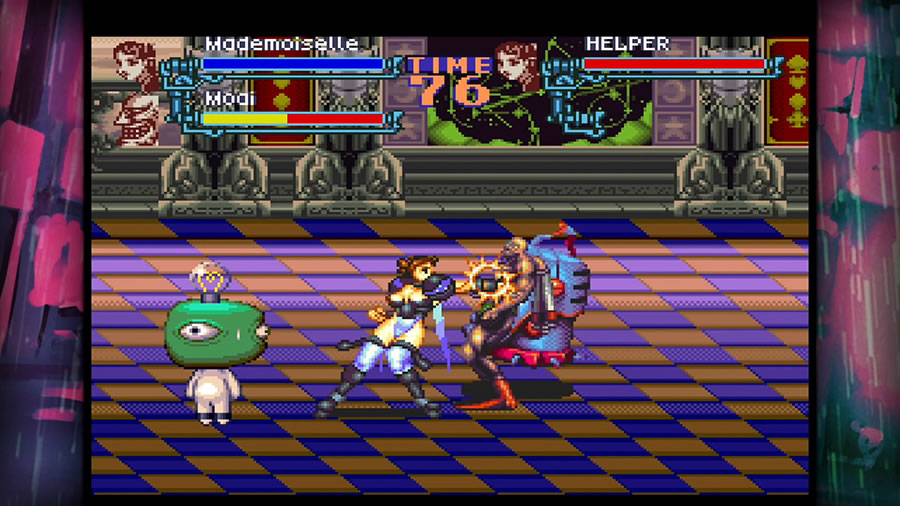
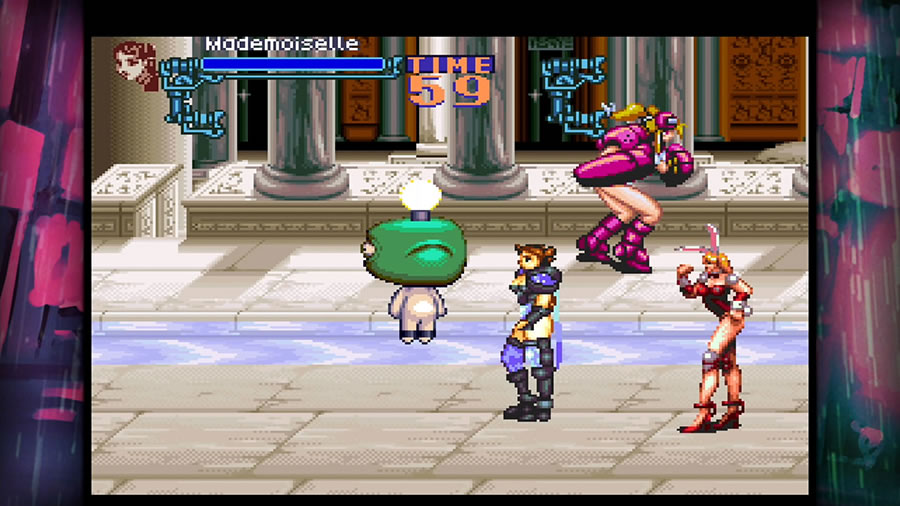
That said, there’s a lot to like about each game. Gourmet Warriors is absolute madness, giving us a tasty science fiction story and mixing in all the ingredients you need for a delicious dish. Literally. This is a game where you collect food. It also has over-the-top characters with cheesy names like Bomber Baron Bonjour, an absolutely wild assortment of futuristic enemies and even a pose button, which seemingly has no gameplay advantage, outside of looking cool. I also like the level designs and some of the unique ways they go about throwing and beating up bad guys. Had they tightened up the gameplay, paced the levels better and added just a little more depth, this really could have been something cool.
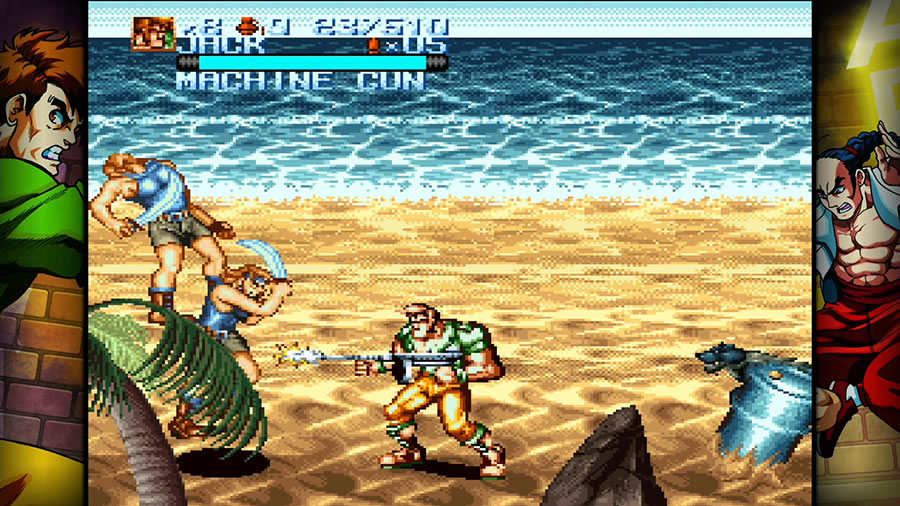
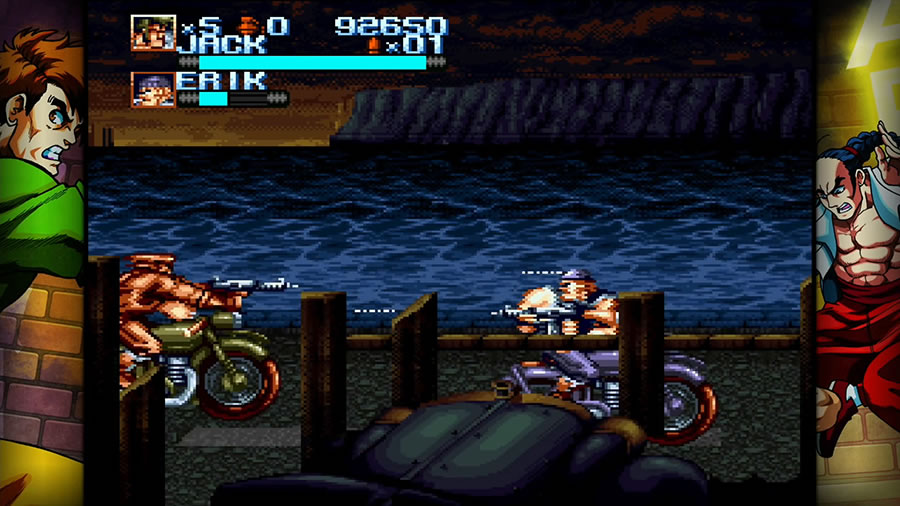
I can do this for basically every game in this collection. For example, I really like how Iron Commando emphasized the guns, something that made it really stand out from the other brawlers. It also has a couple of cool vehicle stages, as well as some cool looking backgrounds. Legend is probably the best looking of any of the games in the collection, and it also offers one of the longer stories. I was especially impressed with the fun way the map is represented. That’s a nice touch.
Of the games in the collection, my favorite is First Samurai, which I would argue is not even a beat ‘em up. It’s more of a side-scrolling action/platformer, complete with well-crafted stages that require you to not only use your fast reflexes, but also your head to solve the puzzles. I wasn’t as big of a fan of the sequel, Second Samurai, but both of these games do a good job of breaking up repetition of the other brawlers.
And that is the unfortunate knock against this entire collection – it’s so damn repetitive. Don’t get me wrong, I’m a fan of this style of beat ‘em up, but there’s a reason why most of these games are only 40 minutes long. What I quickly discovered is that this is not the kind of collection you want to binge. For this review, I played through all of these games in a short amount of time, and I’ll freely admit that it was a mistake. No matter the theme or gimmick, a lot of the games started to blur together, and I found getting through the longer games to be a real slog.
Would that still be the case if I had spread these games out? Probably not. Had I given myself a little time between games, I likely would have been a little more forgiving about each game’s imperfections. But when you play them all in a row, you start to realize why ‘90s gamers started to lose interest in the genre. It also makes you appreciate how much better we have it with the new crop of retro-inspired brawlers, like Streets of Rage 4.
It also doesn’t help that a lot of these games have big glaring problems. They are slow and sluggish, often with poorly designed stages. There are multiple games here that want you to stomp on tiny enemies or snakes, but our hero simply doesn’t have the moves to effectively get the job done. No matter how much fun you’re having, there’s always something that will get in the way and actively try to ruin the experience. Like I said before, these are not the top-tier beat ‘em ups, but rather the second (or maybe even third) stringers.
And yet, part of me wants to recommend the Beat ‘Em Up Collection. While there are no must-play games for me to rave about, what you get are seven mostly good games. There are a couple of notable duds (I’m looking at you, Sword of Sodan), but games like Water Margin, Legend and Gourmet Warriors more than make up for that. It’s also cheap, coming in at only $20. For that reason, I’m going to give this a tepid recommendation. Just make sure and take a break between each game. There’s no reason to rush.
If you’re into beat ‘em ups and want to play a bunch of thirty-year-old brawlers that you’ve probably never heard of, then the Beat ‘Em Up Collection is for you. That said, you may want to temper your expectations, because there’s nothing as good as Final Fight or Streets of Rage in this package. On the other hand, with only a couple of duds, most fans of the genre will have a good time with this collection, even though it’s a bit barebones and there are few standout games. You’re getting a lot of punch for your $20. A lot of repetitive punches. If that sounds like a good thing, then the Beat ‘Em Up Collection is worth seeking out.
This game was submitted by either the video game publisher or developer for review purposes. All games were reviewed on the hardware listed. For more questions and more information about Defunct Games' review policy, please send us an email HERE.