No matter if you call it soccer or football, the goal remains the same. If you're a fan of the beautiful game, then you might be interested to hear that Rock It Games has just released a new collection called Jaleco Sports: Goal on PC. This new compilation comes with the Nintendo Entertainment System version of Goal!, along with the Super NES follow-up, which in some parts of the world was called Super Goal! That's cool news, but are any of these games actually worth playing? And why isn't Super Goal! 2 in the package? To answer these questions, I decided to flip through the pages of Nintendo Power, GamePro, Mean Machines and more classic magazines that reviewed these games back when they first came out. Get ready to shout GOAL! for as long and loud as you possibly can, because it's time to hit the pitch for this edition of Jaleco Sports Review Crew.
GOAL!
Nintendo Entertainment System
Jaleco
1989
Review Scores
| Publication |
Scores |
| Nintendo Power |
3/5 |
| Total |
39% |
| Mean Machines |
33% |
| AVERAGE SCORE |
44% |
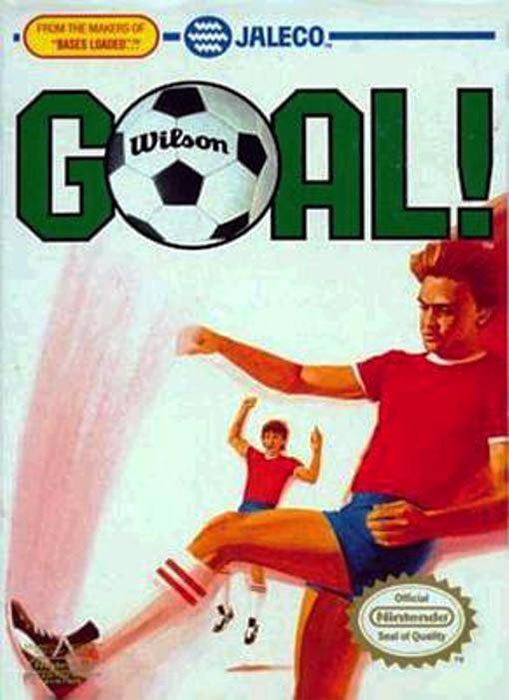
After having established their bona fides in the sports genre with 8-bit hits like Bases Loaded and Hoops, Jaleco was ready to expand their quickly-growing catalog with the introduction of a brand-new sport – soccer. Or, as the rest of the world calls it, football. Hitting the Nintendo Entertainment System in late 1989, Goal! was far from the first soccer game to grace the console, but it promised the most modes and a unique camera perspective. To me, this just looks like any other Soccer game on the NES, but let's see the critics break down how Goal compared to the competition.
If you're not from the United States, then the first thing you need to know is that soccer was basically invisible to game journalists in the early days. To put this in perspective, Electronic Gaming Monthly didn't review a single 8-bit soccer game. And they were hardly alone, as only one American magazine reviewed Goal in 1989. Unfortunately, that magazine is Nintendo Power, which gave it a 3 out of 5 in an era where they didn't write proper reviews. Lame.
The good news is that the British press was there to pick up the slack. Of course, the bad news is that they basically hated it. For example, Total gave the NES version of Goal a score of 39%, complaining about the “grunch grunch” sound effects and the “slow, confusing, annoying, unfair and unrealistic” gameplay. They compared the life span of the game to a sick parrot that is now on the critical list. “Wah! Flickery graphics, random player-switching and opponents with glue on their boots. Everything you never wanted from a football game.”
It may be hard to believe, but things get even worse when we check in with Mean Machines. They gave the game a score of 33%, and I'm just going to read this review the way it's written, using the words they used in 1991. Just reading it verbatim. “I didn't think there could be any soccer game worse than Nintendo World Cup, but I was wrong, and how! Goal is a crippled, retarded excuse for an NES football game, featuring stick insect-like main sprites and pathetic pitch graphics. I have no idea why Jaleco chose to warp the action through 45 degrees, but I can safely say that the effort was wasted. Gauging the height and speed of the ball is made all the more difficult because of it. Having all manner of options tarts up the game very slightly, but there's simply no hiding the fact that Goal must rank as one of the worst soccer games produced for any console. It's a sad day for NES footy fans.”
Yeah, the critics were not impressed with the slow gameplay and weird camera angle. There aren't many reviews to go by, but with an overall average of 44%, it's clear that nobody is recommending this one. Let's see if that will change with the 16-bit sequel.
Super GOAL!
Super nES
Jaleco
1992
Review Scores
| Publication |
Scores |
| GamePro |
4.5/5 |
| Super Action |
84% |
| N-Force |
72% |
| Nintendo Magazine System |
60% |
| AVERAGE SCORE |
77% |
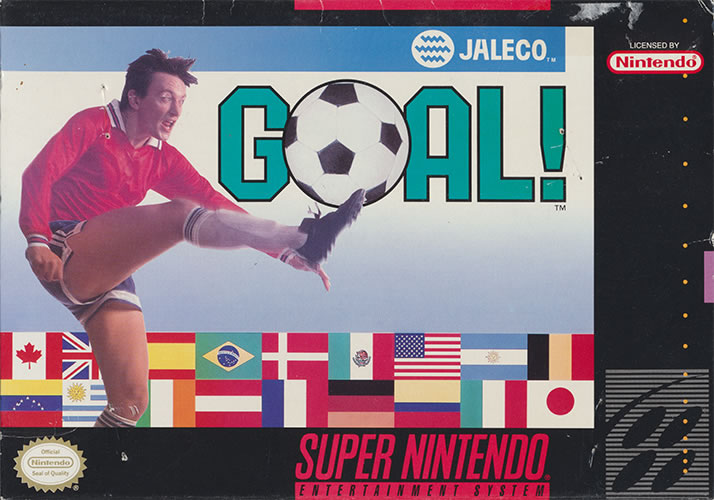
Three years after grunch-grunching onto the 8-bit NES, Goal returned on the Super NES in an installment called ... Goal! That's right, it has the exact same name as its 1989 predecessor in the U.S., but over in Europe, the game goes by Super Goal. This is a heavily updated version of the original, offering faster gameplay, better control, larger characters and, best of all, a much better camera angle. In other words, it's a whole new game. But did the critics notice? That's the question.
Of course they did. Across the board, the critics praised Super Goal as a vast improvement over its 8-bit predecessor. Let's start at the bottom and work our way up. In this case, the lowest score belongs to Nintendo Magazine System, which gave the sports game 60%. “Remember Jaleco's Goal on the NES? Yes, it has been fully revised for the 16-bit system in all its abhorrence. Actually, Super Goal doesn't play too badly, partly because it's slower than the recent Super Kick Off. There is no vast set of options to keep you from the action, and in-game strategy is simple to control. The visuals have a distinct 8-bit appearance and sound is strangely detached from the action, more in keeping with the likes of Rampart. One major flaw, common to many football games, is that it's very hard to score because of the clairvoyant goalie system. Why not make the keepers a little more fallible, and make the game a lot more exciting?”
While Nintendo Magazine System may have been a bit iffy on Super Goal, the same cannot be said about the rest of the critics. N-Force gave it a solid 72%, while Super Action went all the way up to an 84%. “The more I played this, the more it grew on me. Don't worry – it's not another Kick Off. What happens as you play, however, is a startling metamorphosis. Skills are developed you never realized you had, pixel perfect passes can be performed, shots can be blasted into the back of the net, and the opposition's legs can be crunched. As you might expect, there is a hefty seam of two-player fun to be mined here, though when we played at the office, it did tend to end with sulks and shouts. Super Goal doesn't get a super-star, but if I were marking on gameplay alone, it would. It just seems a little ragged at the edges to be given any accolades.”
When it comes to the top score, look no further than GamePro, who gave Super Goal a score of 4.5 out of 5. “You don't have to worry about substitutions, fatigue or wind factors, because Goal is a player's game, not a coach's. On occasion, you have time to think up strategies, but for the most part, this game is all action. The graphics and sound won't make you dribble, but the gameplay will grab you by the super cup and trap you for hours of fun.”
So wait, do I want to be grabbed by the super cup or not? I'm confused. Either way, one thing is perfectly clear – the critics liked Super Goal way more than the 8-bit original. The change in camera angle and gameplay made all the difference, so it shouldn't surprise anybody that the overall average is a very solid 77%. That's up 33 points over the original's 44%.
In case you're wondering, Super Goal also scored better than its follow-up – Super Goal 2. Unfortunately, that game isn't included in the Jaleco Sports: Goal compilation. For whatever reason, you only get two of the games. But don't worry, if the scores are to be believed, this collection features the best installment. Super Goal 2 only managed to muster up an average score of 66%. The Game Boy port did fair better, tying Super Goal with 77%, though there are barely any reviews to pull from.
So, in the end, if you buy Jaleco Sports: Goal, you'll get both the best-reviewed game in the series, as well as the worst. The compilation really goes for the extremes. Now, bring on the Bases Loaded collection.