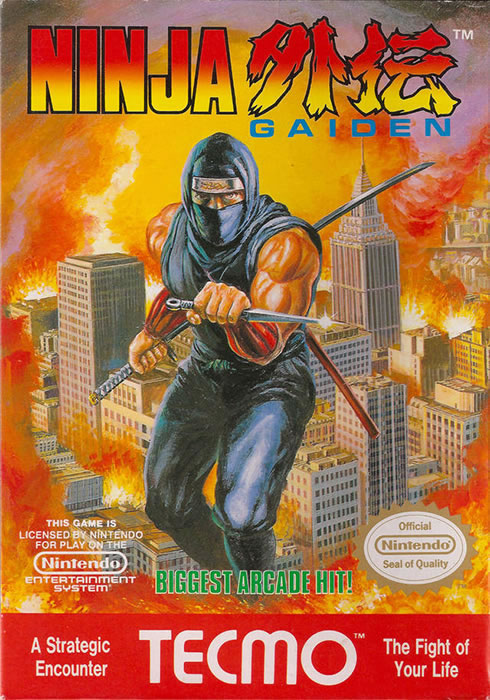
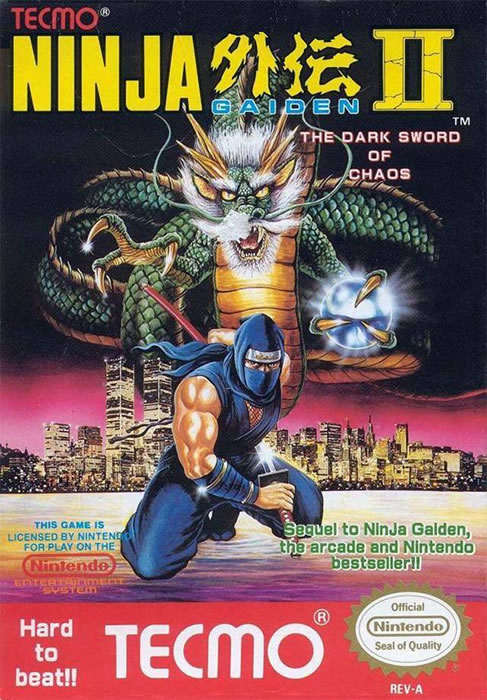
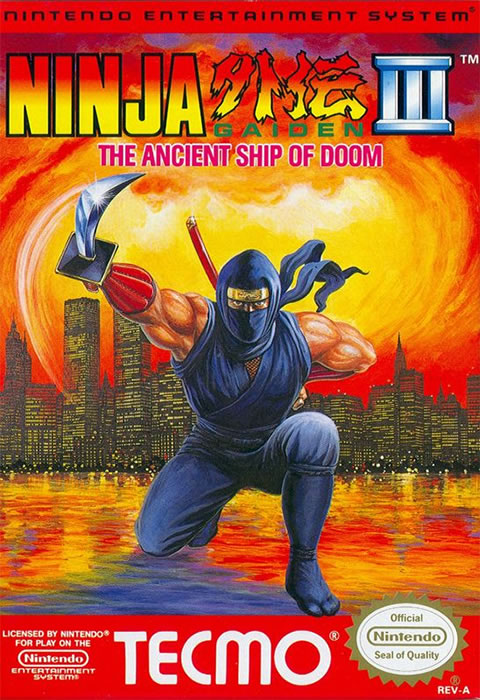
If you're anything like me, then you're a long-time fan of Ninja Gaiden. From its humble beat ‘em up roots in the arcade to the cinematic heights of the 8-bit trilogy to completely reinventing itself for the 21st century, Ryu Hayabusa has seen and battled it all. And he'll be returning to home consoles later this month with a brand-new 2D action game called Ninja Gaiden Ragebound. To celebrate this exciting release, we're going to post a series of Review Crew episodes that look at every single era of Ninja Gaiden, starting today with the original 1989 Nintendo Entertainment System game, Ninja Gaiden II: The Dark Sword of Chaos and Ninja Gaiden III: The Ancient Ship of Doom. These were incredibly influential for their time, but are any of these games actually worth playing? To answer that question, I decided to flip through the pages of Electronic Gaming Monthly, Mean Machines, Video Games & Computer Entertainment and more classic magazines that reviewed these games when they first came out. Grab those demon statues and get ready to have strong opinions about birds, because it's time to get 8-bit for this episode of Ninja Gaiden Review Crew.
Ninja Gaiden
Nintendo Entertainment System
Tecmo
1989
Review Scores
| Publication |
Scores |
| Computer Entertainer |
3.75/4 |
| Raze |
90% |
| Mean Machines |
88% |
| Game Informer |
6.7/10 |
| AVERAGE SCORE |
85% |
For gamers of a certain age, Ninja Gaiden on the Nintendo Entertainment System was nothing short of a revelation. In an era when a game's plot was usually limited to the instruction manual, Ninja Gaiden bucked the trend by giving us an action/platformer with cinematic cut scenes that told a surprisingly deep and involving story. While primitive by today's standards, these cinema scenes were incredible and made you care about the characters like never before. Of course, It didn't hurt that the actual ninja action was also a lot of fun. Between the excellent story, the amazing presentation and the hard-boiled action, Ninja Gaiden went on to become one of the best 8-bit trilogies of all time. Let's see if the critics agreed when they reviewed this first Ninja Gaiden.
The one thing you need to know about Ninja Gaiden is that it came out in 1989, back at a time when there weren't very many magazines reviewing games. As such, we aren't going to get the usual takes from Electronic Gaming Monthly and GamePro. Instead we're going to turn to Mean Machines, which gave the game a strong score of 88%. Julian argued that “Ninja Gaiden is very much like a simplified version of the Shadow Warriors coin-op, with the hero running around beating the seven shades out of the baddies and using the backdrop to climb and leap to seemingly inaccessible parts of the screen. The graphics are great, with varied, well-drawn backdrops and some great sprites. The sound doesn't quite match up to the standards of the graphics, but what's there is atmospheric and suits the action. It seems pretty tough at first, but once you get used to the combat moves, you'll find yourself cutting a swathe through the enemy, swords and shurikens flying. Ninja Gaiden is a thoroughly enjoyable beat ‘em up and is highly recommended to combat fans.”
Raze also liked the game, giving the NES title a high score of 90%. That's cool and all, but the magazine I want to draw your attention to is Game Informer, which actually gave Ninja Gaiden the lowest score. Reviewed a few years after its first release, the three Game Informer editors were less than excited about revisiting this 8-bit classic. Paul, The Pro Player, gave the game a 5 out of 10, noting that “When this game first came out, I assumed it was the arcade translation ... wrong. Since then, I've felt the 8-bit version was lame. The arcade version was awesome, and this isn't even close. I guess I'm still bitter, so I'll leave this version in the attic ... and play the real arcade version on the Lynx.” Ross, the Rebel Gamer, liked the game a bit more, giving it a 7.25 out of 10. “The cinemas between levels have yet to be topped by any NES game. The one problem this game has is its playability. The main character is a ninja, trained in both martial arts and assassination, who should be virtually unstoppable. Unfortunately, that invincible quality just doesn't come through.” With an average score of 6.5 out of 10, Game Informer was not impressed with Ninja Gaiden.
While Electronic Gaming Monthly didn't review the game back in 1989, they did give it an award in their 5th issue. Naming it the “Best Ending in a Video Game,” EGM argued that “with super graphics detailing an equally outstanding storyline, the climax of Ninja Gaiden is better than some movies we've seen recently. Not only does the game explain many mysterious secrets, it also leaves the door open for part two, which is coming next year.” Outside of that award, there aren't many more reviews, and that's a shame. It would have been great to see if others agreed with Ross and Paul at Game Informer, or if they were more in line with Julian at Mean Machines. We'll have to wait for the sequel to find out what other critics thought of the Ninja Gaiden series.
Ninja Gaiden II: The Dark Sword of Chaos
Nintendo Entertainment System
Tecmo
1990
Review Scores
| Publication |
Scores |
| Nintendo Power |
4.7/5 |
| Video Games & Computer Entertainment |
9/10 |
| Electronic Gaming Monthly |
8.75/10 |
| AVERAGE SCORE |
91% |
One year after Ninja Gaiden laid the groundwork for a future filled with cinematic video games, the sequel arrived with more of what made the first game so good. I'm talking about bigger levels, better power-ups, more cinemas and story that somehow tops the original. It introduces some of the franchise's best characters and gives us an even worse baddie to contend with. It hints at a much more complicated power struggle between the villains, and has one of the greatest endings of all time. This truly was the sequel that fans had been waiting for, but were the critics impressed?
Let's start off with Electronic Gaming Monthly, who opted to not review the first game in 1989. Ed gushed that The Dark Sword of Chaos is “probably the best sequel ever made, with near-perfect graphics, challenging gameplay and intermissions which entice you to always go round further. Other than the difficult gameplay in higher levels, Ninja Gaiden 2 is as good as an action game can get.” Oddly enough, the only EGM critic to not give the game a 9 out of 10 was their own resident ninja, Sushi-X: “There's no denying the fact that Ninja Gaiden 2 is a superb game. It outdoes the original in nearly every department. It's addictive and the intermission and story are terrific. Using the same bosses that were in the first game is a letdown, but it's still worth the price of admission.” EGM gave Ninja Gaiden II an average score of 8.75 out of 10.
Would you believe that EGM's score puts them at the bottom of the scale? It's true, the reviews only go up from here. For example, Video Games & Computer Entertainment gave Ninja Gaiden II a score of 9 out of 10 in their 17th issue. “Titles like Ninja Gaiden are proof that video games are learning how to evoke players' emotions and entertain just like a movie or TV show can. These adventures go beyond the confines of video game gimmickry; in fact, I wouldn't hesitate to call it a legitimate art form. That may be a lofty position for game designers to aspire to, particularly since the average NES owner is not yet in high school – but quality doesn't hurt, and Tecmo knows it. Ninja Gaiden II is a winner, and it's got my vote as one of the best NES carts ever. Highly recommended.”
If you're curious who gave Ninja Gaiden II the highest grade, that magazine was Nintendo Power, who went all the way up to a 4.7 out of 5. That makes it the second best-reviewed game of 1990, right behind Castlevania III. Unfortunately, this was an era of Nintendo Power where they did not publish a written review with their scores, so we'll never know what made them go that high. Instead, I'd like to point out that Game Players magazine ended up giving the game an award for NES Excellence, while it earned Electronic Gaming Monthly's Best Ending in a Game award in their 15th issue.
While there may not be a lot of reviews, the few that covered Ninja Gaiden II loved it. Just look at the way Video Games & Computer Entertainment covered it, practically comparing it to the Mona Lisa or Citizen Kane. It's the beginning of critics making the argument that video games are more than just a child's toy, it's art. With an average score of 91%, this truly was one of the best-reviewed games for the Nintendo Entertainment System and one of the greatest sequels of all time.
Ninja Gaiden III: The Ancient Ship of Doom
Nintendo Entertainment System
Tecmo
1991
Review Scores
| Publication |
Scores |
| GamePro |
5/5 |
| Electronic Gaming Monthly |
8/10 |
| Nintendo Power |
3.9/5 |
| Video Games & Computer Entertainment |
7/10 |
| AVERAGE SCORE |
82% |
The third and final game in the original 8-bit trilogy is Ninja Gaiden III: The Ancient Ship of Doom, a prequel that fills in some of the lore between the first and second games, all while complicating things with plot holes and contradictions. Of course, the fans didn't care, because they still got fast-paced levels, exciting boss fights and even more impressive cinema sequences. Of the three NES games, this is often cited as the weakest link, though I would argue that it's still a lot of fun to play. How did the critics view The Ancient Ship of Doom back in 1991? Let's find out.
We're going to once again start with Electronic Gaming Monthly, which gave game yet another Ninja Gaiden game a high score. This time it was an average of 8 out of 10, down slightly from the 8.75 they gave the middle chapter. While the score was down, the enthusiasm was up. Martin called this a player's game. “Only three continues makes this the perfect cart for those who've mastered the first two carts. Warning: This is a high stress cart, not recommended for wimpy gamers. Boasts great graphics and cool music, although the cinemas are kind of cheesy.” Steve agreed, arguing that this “has to be the best of the Gaiden series, The Ancient Ship of Doom makes up for both the lack of difficulty and awkward controls that kept the previous Gaiden games from being full 10s. The theme has worn a little thin, but the action, sounds and graphics are still top notch.” Wait ... did he just say that the first two Ninja Gaiden games were too easy? Boy, that's not my recollection of those games.
As we go slide down the review scale, we see Nintendo Power give the game a 3.9 out of 5 in their 27th issue. They would later award the game “Best Challenge,” which is certainly deserved. For what it's worth, the lowest score comes from Video Games & Computer Entertainment, which went from giving the second game a 9 to giving this final installment a 7. “This is the third time around for Ninja Gaiden, and this new edition's gameplay is as fast and furious as that of its predecessor. If you've played the first two chapters of the ever-popular story of Ryu and Irene, you'll feel right at home leaping, spinning, climbing and blasting your way through the seven levels that make up Ninja Gaiden III. All in all, Ninja Gaiden III is more of the high-quality, jump and shoot ninja action that the first two games were famous for. Its gameplay is simple enough to get novices started quickly, but challenging enough for even ninja gurus. Recommended.”
If we flip to the other side of the scale, we see GamePro swoop in and give The Ancient Ship of Doom a perfect score of 5 out of 5. This was not the first time they reviewed the Ninja Gaiden series, but it was the first game to earn a score. “If you like ninja fighting, this is a no-brainer. Go for it! Even the sounds rate above average for Ryu's ‘hiii-yahs' alone. Tecmo hints that this is the final chapter of NES Ninja Gaiden. But before you run out and commit seppuku, consider this: Maybe ending Ninja Gaiden is okay. Maybe Ryu should finally hang up his sword and find peace. Maybe Irene should enjoy life instead of always losing it. Maybe Ashtar should just chill out. Nahhhhh!!”
This would end up being the final installment in the NES trilogy, but not the last we heard from Ryu and the Ninja Gaiden franchise. 14 years later, Tecmo rebooted the series o Xbox, where it received a number of sequels and spin-offs. We'll cover those games in a future episode, along with the Super NES compilation, the Lynx port of the arcade game and some of the other Ninja Gaiden releases over the years. We still have a lot of Ninja Gaidening to do between now and the release of Ragebound.