Ninja Gaiden: Ragebound is coming out this week, can you believe it? To celebrate, we've spent all of July looking back at Ryu Hayabusa's impact on both the critics and the industry. We've already touched on the 8-bit trilogy, the handheld spin-offs and even the weird ports that found their way to other consoles. Now, it's time to dive head first into the 3D series, which includes the 2004 reboot, Ninja Gaiden II, Ninja Gaiden 3, Ninja Gaiden: Dragon Sword and even the much-maligned 2014 spin-off, Yaiba: Ninja Gaiden Z. Those are definitely Ninja Gaiden games, but are any of them actually worth playing? To answer that question, I decided to flip through the pages of Electronic Gaming Monthly, Edge, Game Informer and more classic magazines that reviewed these games back when they first came out. Get ready to pull out those ten-hit combos, because you're going to need them in this episode of Ninja Gaiden Review Crew.
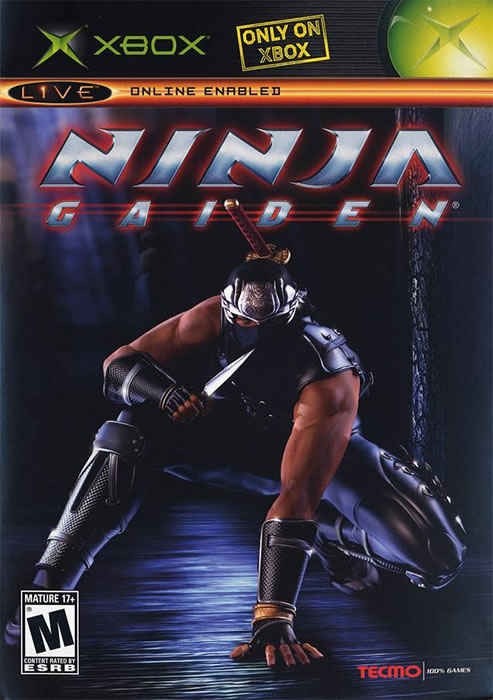
Ninja Gaiden
Xbox
Tecmo
2004
Review Scores
| Publication |
Scores |
| GamePro |
5/5 |
| Official Xbox Magazine |
9.6/10 |
| Game Informer |
9.5/10 |
| Electronic Gaming Monthly |
9.5/10 |
| Computer & Video Games |
9.3/10 |
| GMR |
9/10 |
| Xbox Nation |
9/10 |
| Edge |
9/10 |
| AVERAGE SCORE |
94% |
After the critical and commercial success of the Ninja Gaiden trilogy on the Nintendo Entertainment System, many expected that Tecmo would give Ryu Hayabusa a 16-bit makeover on the Super NES. But that didn't happen. We also didn't get a 32-bit sequel, though Ryu would find his way into the Dead or Alive fighting franchise. In a move that frustrated fans from around the world, Tecmo decided to wait until 2004 to reboot the series on the Xbox. That's a twelve-year gap between releases, and the hype was real. This was more than just a brand-new game in the beloved franchise, but it was also one of the most important console exclusives on the original Xbox. This game was a big deal, and the critics expected big things from this long-overdue installment. Did it live up to those lofty expectations?
Yes, absolutely. Of course it did. This is one of those games where the range in scores goes from 90% all the way to a perfect 100%, as you'll find when we hone in on Electronic Gaming Monthly, who sits right in the middle with an average score of 9.5 out of 10. Shane gushed that “it's as good as you hoped it would be. Hell, it's actually BETTER. With one stylish katana slash, Ninja Gaiden slices its way to the top of the action genre. And it's not all about graphics. Well, OK, it is, in part, simply because the visuals are just so awe inspiring. It's tough to even find faults with such a polished game, but I did suffer a few unnecessary deaths due to occasionally obtuse camera angles. Also, too many of the puzzles follow the absurd ‘find the handle to turn the crank' mold. Regardless, this is an unmissable instant classic that completely deserves your time and money.” CJ agreed: “Merriam-Webster, it's time to revisit the entry for ‘kick-ass' and tack on ‘also see: Ninja Gaiden.' The visuals strike the first blow, but the minute you decide to stop smelling the flowers and strike back, you begin to see this isn't just a pretty picture. Gaiden's gameplay is equally well-crafted, with responsive control that demands fighting-game-caliber reflexes. It's nail-bitingly tough, but it's extremely rewarding, since it forces you to hone your ninja skills. The game's only flaw is its lame-duck camera, which makes battling groups of enemies more difficult than it should be. Even so, no Xbox should go without Gaiden.”
If you want to see the so-called “low” scores, then you might be disappointed. Computer & Video Games went a little bit lower than EGM, giving the reboot a 9.3 out of 10. And then there's a massive pile-up, with the rest of the magazines giving Ninja Gaiden a 9 out of 10. That's the score GMR gave the game in their 16th issue, as well as Xbox Nation in their 19th. Edge also went with a 9 out of 10, summing it up this way: “To applaud Ninja Gaiden for being hard is to miss the point – not least because there are portions of the game that aren't. The point is that the fluidity of movement that felt so ground-breaking in Prince of Persia only a few months ago is something which Gaiden supplies with almost contemptuous ease. The point is the dozens of things that are done so well you don't notice them happening – the perfectly judged auto-aim, the sound design packed with information and atmosphere. The point is that while it could be argued that no game has the right to demand of you what Gaiden does, few other games offer such exceptional riches in return.”
Moving back up the scale, we see Game Informer agree with Electronic Gaming Monthly's 9.5 out of 10. The Official Xbox Magazine went one tick higher, going with a 9.6 out of 10. And then there's GamePro, who does the most GamePro thing ever – they give it a perfect 5 out of 5. “Highly skilled players may be able to finish the game quicker, but the majority of folks will clock in for a 20-plush-hour thrill ride. Few games are this good, for so long, and still keep you coming back for more. Ninja Gaiden is truly outstanding.”
While it might not command the same good-will these days, Ninja Gaiden was a genuine force when it was released in 2004. With an overall average of 94%, that puts this 3D reboot in the same category as games like Halo and Ocarina of Time. That also makes it the highest-scoring Ninja Gaiden game, at least so far. Let's see if Ninja Gaiden: Dragon Sword can top that.
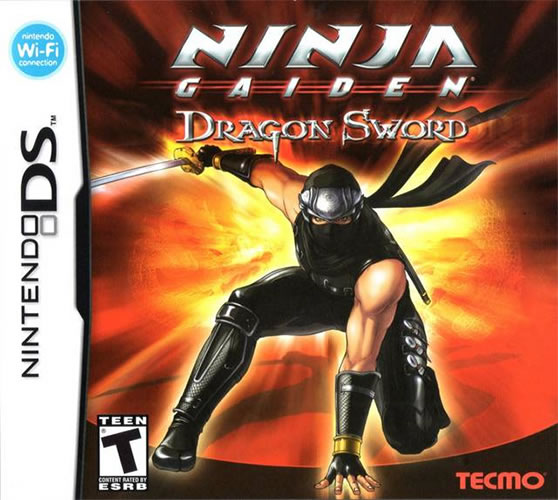
Ninja Gaiden: Dragon Sword
Nintendo DS
Tecmo
2008
Review Scores
| Publication |
Scores |
| Maxim |
5/5 |
| Electronic Gaming Monthly |
B+ |
| Nintendo Power |
8.5/10 |
| GamePro |
4/5 |
| Game Informer |
7.75/10 |
| Edge |
7/10 |
| AVERAGE SCORE |
84% |
After earning high scores on the Game Boy, Game Gear and even the Lynx, Ninja Gaiden didn't return to a handheld console until 2008, with the release of Dragon Sword on the Nintendo DS. Set between the first and second entries in the reboot timeline, this was a 3D action game that used the system's unique capabilities to craft a Ninja Gaiden game like no other. This is a game that doesn't just use the dual-screen setup, but it has you turning the system on its side and tapping the screen to take out enemies. It's the kind of game that could only exist on the DS. Let's see if that had any impact on the reviews.
Instead of starting with Electronic Gaming Monthly, let's shake things up by going to the bottom of the scale and checking in with Edge, who gave Dragon Sword a solid score of 7 out of 10. They were impressed that it used the console's touchscreen in a unique way, but argued that “it's not quite sublime. It loves to defy expectations of a handheld title, loading itself with all the moves, magic powers and textures of the console game, retaining even things it could really do without. Some of its larger fiends delight in lunging, taking you down and molesting you for a few seconds, savaging the game's hard-fought rhythm. And it's tough, its learning curve almost flat but its difficulty curve exponential, the waves of enemies growing larger and more frequent between checkpoints. In the meantime, though, it at least makes time for some jocular microphone action and dialogue, proving that if there's a gossamer-thin line between gimmick and game on DS, Nintendo isn't alone in seeing it. Team Ninja's finest, most intelligent game since Ninja Gaiden Black, it leaves high hopes for the imminent 360 sequel.”
Moving up the scale we see Game Informer give the side story a solid 7.75 out of 10, while GamePro went a bit higher, giving the game a 4 out of 5. “Team Ninja is known for making games that really test the limits of a system's hardware, and Dragon Sword is no exception. As a standalone DS game, Ninja Gaiden: Dragon Sword is an amazing adventure almost at the level of The Legend of Zelda: Phantom Hourglass. While Dragon Sword's light is diminished by the shadow of its near-perfect console counterparts, it's still a perfect way to help pass the time until Ninja Gaiden II arrives.”
On the top of the pile, we have Nintendo Power, who gave the DS game a very strong 8.5 out of 10. And then there's also Maxim magazine, which gave it a perfect 5 out of 5. But, seriously, who cares what Maxim has to say; let's check in with Electronic Gaming Monthly, who gave Dragon Sword an average score of B+. Matt explained that “Dragon Sword is too good. Somehow, Team Ninja removed the series' hardcore barrier without making the game overly easy and created controls as polished as they are ballsy. My biggest complaint: Just as the game gets comfortable experimenting with more than slicing up enemies, it ends. If it had more variety and a story that felt less like fan fiction, it's be competing with console action games.” Nick agreed: “I agree that it's an impressive accomplishment that Dragon Sword makes the transition with most of its finely tuned ninja luster intact. It's easy to appreciate the speedy, satisfying touchscreen combat, even if it's disappointing to see so much recycling after the novelty wears off. But while the basic mechanics are aces, I found all other touchscreen functionality to be stupidly simplistic. It's fun while it lasts, though – particularly the boss battles – and will hopefully pave the way for more original DS action.”
With strong scores across the board, I'm surprised Tecmo didn't continue experimenting with touchscreen Ninja Gaiden games. And not just on Nintendo handhelds, but also cell phones and tablets. This really could have been a big series. But alas, it was one and done for Dragon Sword. That's a shame, because with an overall average of 84%, it's easily one of the critic's favorite Ninja Gaiden games.
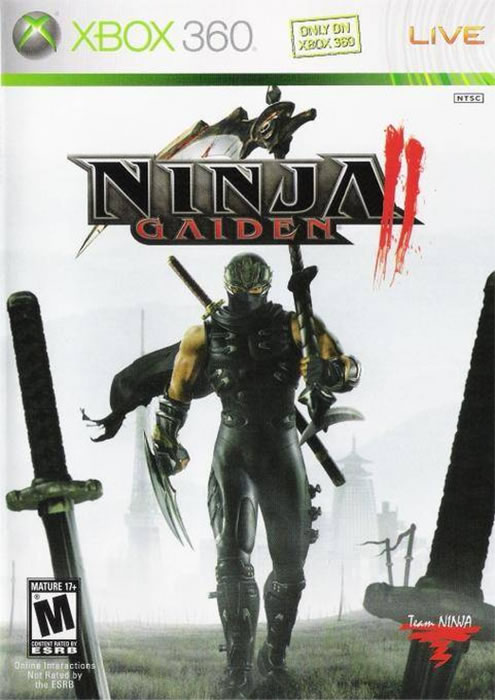
Ninja Gaiden II
Xbox 360
Tecmo
2008
Review Scores
| Publication |
Scores |
| Game Informer |
8.75/10 |
| Official Xbox Magazine |
8.5/10 |
| Edge |
8/10 |
| GamePro |
4/5 |
| Electronic Gaming Monthly |
B |
| AVERAGE SCORE |
83% |
Four years after the Ninja Gaiden reboot sliced up the original Xbox, Tomonobu Itagaki was back with the long-awaited sequel, which would also prove to be the final Ninja Gaiden game he ever worked on. This time an Xbox 360 exclusive, Ninja Gaiden II shakes up the combat by making everything a lot more brutal, with Ryu using his various blades to slice and dice his way through the competition in the most gruesome ways possible. This was a darker and more mature Ryu Hayabusa, and Itagaki hoped you were ready for it. The fans certainly were, but what about the critics?
After being blown away by the 2004 reboot, I think it's fair to say that the critics were disappointed by Ninja Gaiden II. Electronic Gaming Monthly, for example, went from giving the first game a near-perfect score, to giving the sequel a lowly B rating. Nick praised the attention given to tightening up the combat, but has a list of issues a mile long: “The awful camera compounds those problems. It drags along behind you like a wounded dog and wanders off on its own when you need it most. Its puzzles occupy a familiar corner of time-wasting, with minimal backtracking to, say, open a door you couldn't open 30 seconds ago. Bosses are horribly inconsistent in their difficulty. It's dismaying that these elements are simply brushed aside under the assumption that the combat can support the weight of the entire experience. When things click, it most certainly does, but it's an otherwise inconsistent package with almost as many frustrations as satisfactions.” Shane agreed, concluding that “more and more, it's apparent that Team Ninja's concept of cool involves marching out a parade of massively endowed doll-like women and rubber-suited monstrosities that Rita Repulsa might have sent against the Power Rangers. But even if these tacky trappings make Ninja Gaiden 2 feel like a guilty pleasure, its refined gameplay warrants a purchase for gamers craving a challenge.”
The score took a similar slide over at GamePro, who went from giving the original a perfect 5 out of 5 to give this game a mere 4 out of 5. Same thing from Edge, who went from a 9 down to an 8. They complained about the camera and the narrative and the bosses, explaining that “taken as a whole, these issues obviously add up, but it's important to emphasize that they never wholly detract from the greatness of the combat. Rightly or wrongly, they're part of the experience. None of this excuses a fundamental fault in design, of course – and one for which Team Ninja, well versed in the Ninja Gaiden franchise, really has no excuse. To end on a negative note would be to do the game a disservice, however. Ninja Gaiden II is a fascinating and hugely replayable game that shows Team Ninja has a gift beyond the vast majority of developers in the game. And it shows something wider: In terms of mainstream video games, and for all that Microsoft needs the support and attach rates of so-called hardcore gamers, the truth is that hardcore gamers need Microsoft more. Much more.”
You're going to notice a trend as we continue to climb the scale. No matter how high the score is, everybody seems to be a little down on Ninja Gaiden II. There's an apologetic tone throughout many of the reviews. We see that in the Official Xbox Magazine review, where they gave it an 8.5 out of 10. And it even shows up in Game Informer's review, and they are at the top of the list, giving it an 8.75 out of 10. “Like a bottle of moonshine in your grandmother's cabinet, other elements of Ninja Gaiden's gameplay have started to lose their potency. Whenever the game isn't focusing on action, it feels like a game from a forgotten age in gaming. Contextual control issues sometimes arise, making it difficult to do simple things, like shimmying along a pipe. The platforming elements, such as running along and climbing walls, can be touchy, and we noticed a few loading issues, too. The game still follows the tired pattern of finding key A to open locked door B. And the story is about as unnecessary as a tomato fruit roll-up. If you are willing to put up with those few annoyances, Ninja Gaiden will show you a great time, but let's hope Team Ninja adds a few new flavors to the mix next time it stirs the pot.”
Oh, don't worry, Team Ninja is definitely going to change up the formula in the next game, but you should probably curb your excitement. When it comes to Ninja Gaiden II, the reviews were definitely down compared to the first game. We've gone from a 94% down to an 83% in just four years, and spoiler alert, the freefall is starting to pick up steam. You'll see what I mean.
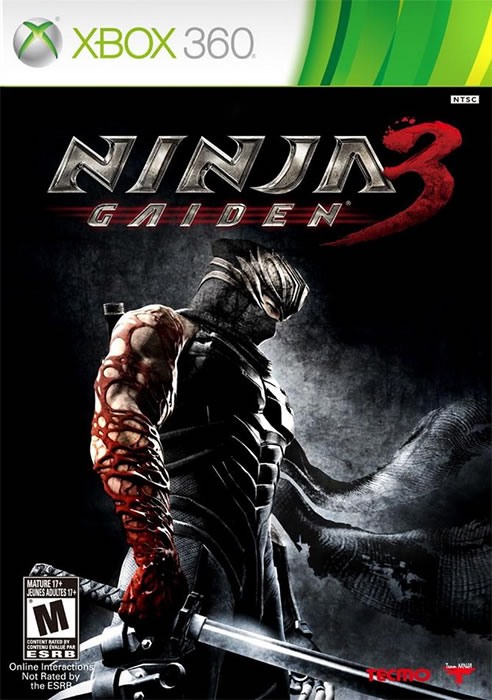
Ninja Gaiden 3
Xbox 360 & PlayStation 3
Tecmo Koei
2012
Review Scores
| Publication |
Scores |
| Official Xbox Magazine |
8/10 |
| PlayStation Official Magazine UK |
7/10 |
| Game Informer |
6/10 |
| AVERAGE SCORE |
70% |
With Itagaki gone and another frustrating four-year wait, many Ninja Gaiden fans wondered which direction Tecmo would take the series next. In a move that frustrated a lot of the core fans, they decided to make the series a lot more accessible, which meant making the stage designs more linear, simplifying the combat and adding as many quick time events as possible. While it still has its defenders, it's clear that these choices angered the fanbase and effectively stopped the mainline series dead in its tracks for more than a dozen years. Let's see what the critics thought of Ninja Gaiden 3.
Before we dive into the scores, I first want to point out that this is the first Ninja Gaiden game Electronic Gaming Monthly has failed to review since the very first game, all the way back in 1989. With no EGM to kick around, let's kick things off with Game Informer, who gave the sequel a very disappointing 6 out of 10. “Ninja Gaiden 3 is not a complete train wreck, but it suffers from a multitude of problems. The action can be fast-paced and engaging at times, but many design decisions significantly bring down the experience. Lacking AI, a limited arsenal, the series' notoriously difficult camera, no inventory/currency system, and an incoherent story combine to make this the most disappointing title in the series.”
For what it's worth, Game Informer's 6 out of 10 was the lowest score of the bunch. PlayStation Official Magazine UK, for example, went a full point higher, giving the game a 7 out of 10. The Official Xbox Magazine had a lot of the same complaints as the other critics, but found a way to soften the blow. “If all of this reads like the evisceration of a horrible game, that's definitely not the case. It's a matter of context. Compared to its predecessors, Ninja Gaiden 3 is a noticeable step back due largely to all the gameplay decisions that are taken out of your hands. Stacked up against its contemporaries, however, it still stands among the finest fast-action experiences on Xbox. Given the rare and tumultuous circumstances that led to such a turnover at Team Ninja, it's fair to wonder what Itagaki's Ninja Gaiden 3 would've been like. Still, THIS version of Ninja Gaiden 3 is what we get, and it deserves praise for being a great way an Xbox action fan can spend $60. It may not live up to the series' impossibly high standards, but it's still a gem in its own right.” OXM gave the game a score of 8 out of 10.
With even the recommendation sounding a bit tepid, it's clear that the critics were disappointed by this third installment. The overall score was a mere 70%, making it the worst-reviewed game of not only the 3D reboots, but of all of the Ninja Gaiden games, including that Game Gear game and the crappy Ninja Gaiden Trilogy on Super NES. That's the bad news. The good news is that we still have one more game to go, and it's Yaiba: Ninja Gaiden Z, so it might not be at the bottom for long.
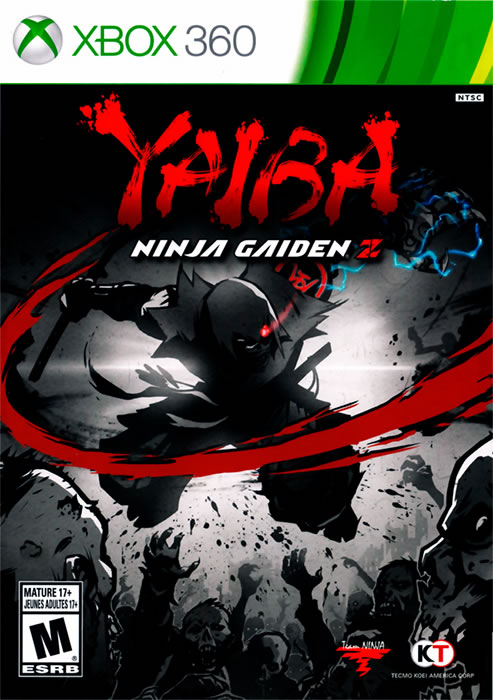
Yaiba: Ninja Gaiden Z
Xbox 360 & PlayStation 3
Tecmo Koei
2014
Review Scores
| Publication |
Scores |
| Game Informer |
6.5/10 |
| Official Xbox Magazine |
4/10 |
| PlayStation Official Magazine UK |
3/10 |
| AVERAGE SCORE |
45% |
After seeing the poor critical and consumer response to Ninja Gaiden III, Tecmo decided to go in a new direction. Yaiba: Ninja Gaiden Z is a spin-off that was released in 2014, allowing it to take big chances with not only the gameplay, but also the characters and setting. For starters, we're now on Earth-14, a planet that is currently in the middle of a zombie outbreak. This allowed developer Spark Unlimited a chance to make Ninja Gaiden more about the fast-paced gameplay where you're fighting off hordes of enemies in a weird futuristic world. That's not necessarily a bad idea, but many fans complained that it was too far removed from the Ninja Gaiden they knew and loved. Let's see what the critics said.
While we've seen the review scores dip slightly over the years, this is where the Ninja Gaiden series absolutely craters. Even with the worst games in the series, there was always that one defender. That's not the case when it comes to Yaiba. The highest score you're going to find in an English-language magazine is Game Informer, which gave it an incredibly generous 6.5 out of 10. “Battles get increasingly frustrating the deeper in you go. Enemies take and dish out a lot of damage and your starting health bar is small. This, paired with the unreliable counter system and mid- to high-tier enemies that rarely get stunned by your attacks, means you're forced to dart around constantly, chipping off a little damage or risking heavy retaliation. When you die, you have to stare at a lengthy load screen and start all the way back at the first wave, no matter how far you progressed in that arena. Like its second-fiddle protagonist, Yaibi: Ninja Gaiden Z resides in the shadow of many other better third-person action games, but it's not terrible if you're specifically looking for a schlocky Saturday.”
Like I said, Game Informer looks incredibly generous compared to the rest of the reviews. For example, the Official Xbox Magazine ended up giving Yaiba a pitiful score of 4 out of 10. PlayStation Official Magazine UK went even lower, going with a 3. “There are bizarre flashes of quality – Yaiba's actual move set, some of its voice acting and visual design seems to be just visiting from another, better game. But even these wear off on the 20th attempt at the same horrifically designed arena fight, and Yaiba's staggering failure to create a coherent camera, combat finesse, likeable characters, interesting levels, or even playable platforming sequences is unforgivable. Yaiba is guilty of the most heinous crime: Creating difficulty not with precision combat, but with myriad borked design calls and some utterly broken camera work.”
Yeah, that is not exactly a ringing endorsement. This really was the low point for the franchise. And what made it even more frustrating, is that this seemed to be the end of the line for Ninja Gaiden. Yaiba was the game that killed the franchise ... at least for a decade. Now, eleven years later, Ninja Gaiden is finally back on track, thanks to both Ninja Gaiden: Ragebound and Ninja Gaiden 4, proving that it's going to take a lot more than a really bad game to stop the Hayabusa clan.