Did Christmas come early? It sure feels like it, because this week classic magazine collectors from around the world were given an incredible gift. In case you haven't heard, our friends over at the Video Game History Foundation announced that they had not only acquired every issue of the long-lost magazine Computer Entertainer, but they also scanned them and even went through the trouble of putting them in the public domain.
This is big news for a lot of reasons, but most importantly because this was an American magazine that kept on reporting and reviewing games through the aftermath of the Great Games Crash of 1983. At a time when every other magazine had folded, Computer Entertainer kept games journalism alive, covering consoles like the Nintendo Entertainment System and Sega Master System years before Electronic Gaming Monthly and GamePro hit newsstands.
If you've watched me cover early 8-bit games in Review Crew episodes, then you've already heard me complain that many of the oldest Nintendo Entertainment System games either didn't get a review or were covered years later by the British press. But that's not the case with Computer Entertainer. They were there when these systems first came out. And if that wasn't enough, they also went to the trouble of actually scoring their reviews. As somebody who has based entire series around review scores, let me tell you, that's a big deal.
With so many mid-80s reviews to swim through, my first thought was about the Nintendo Classics. Seeing as Computer Entertainer reviewed nearly all of the early NES titles, can we use these freshly preserved issues to fill in some of the Nintendo Switch Online gaps? Can we use this to get a little closer to having real reviews for every single game on the service?
As it stands right now, there are 20 Nintendo Entertainment System games on the Nintendo Classics app that we weren't able to cover, due to a lack of magazine reviews. To be fair, a lot of the games we're talking about didn't come to America back in the day, so it makes sense that there wouldn't be any English-language reviews. I'm talking about games like Joy Mech Fight, The Mysterious Murasame Castle and even EarthBound Beginnings. And then there's a game like Super Mario Bros.: The Lost Levels, which did come to America, but on a completely different system and in a game compilation.
When we filter for the early NES games with no reviews that were actually released in the United States, the total drops down to just nine games -- City Connection, Donkey Kong 3, Donkey Kong Jr. Math, Ice Hockey, Mighty Bomb Jack, Star Soldier, Tecmo Bowl, Urban Champion and Volleyball. And now, thanks to Computer Entertainer magazine, we can finally remove seven of those games from this list, leaving Star Soldier and Donkey Kong Jr. Math as the lone NES games without reviews.
In this very special episode of Nintendo Classics Review Crew, we're going to go over those classic Computer Entertainer reviews and see what they thought of everything from City Connection to Urban Champion. Were they big fans of Nintendo's classic one-on-one fighter? Find out now in this exciting new episode of Nintendo Classics Review Crew!
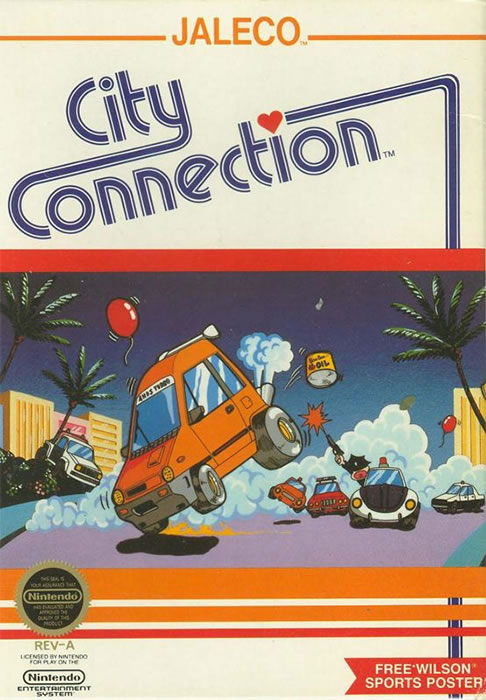
City Connection
Nintendo Entertainment System
Jaleco
1988
Review Scores
| Publication |
Scores |
| Computer Entertainer |
3/4 |
| AVERAGE SCORE |
75% |
Based on the popular arcade game of the same name, City Connection is an early classic for the Nintendo Entertainment System. Published by Jaleco, this is a solid port that is easy to pick up, play and, most importantly, have fun. Anybody can get into City Connection, which made it a favorite in the early days.
For their part, the critics at Computer Entertainer both gave the game a 3 out of 4, concluding that “for all the lawlessness of the game's theme, City Connection turns out to be very cartoonish, cute-as-a-bug kind of game. The action is fast, and it's accompanied by a familiar musical theme by Rachmaninoff. The cuteness of the game is likely to appeal to younger players, though there is certainly enough challenge for older players, as well. City Connection is enjoyable in the short run, but we doubt that it has sufficient staying power to keep most gamers playing it over and over again.”
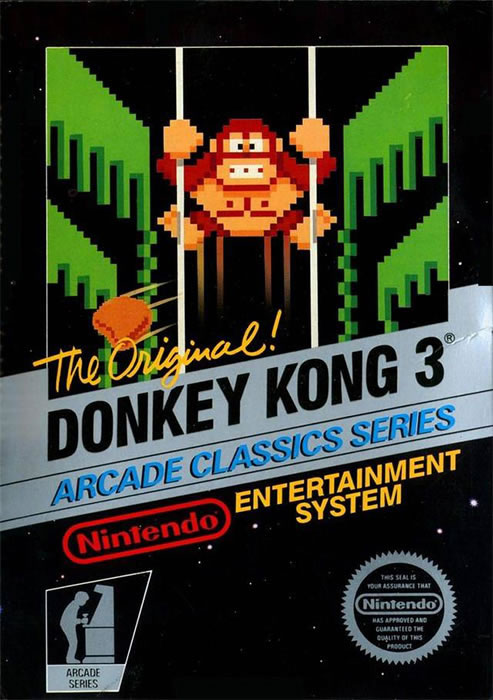
Donkey Kong 3
Nintendo Entertainment System
Ninendo
1986
Review Scores
| Publication |
Scores |
| Computer Entertainer |
3.25/4 |
| AVERAGE SCORE |
81% |
The original Donkey Kong is a hard act to follow up, yet Nintendo navigated that tightrope wonderfully by giving us the amazing Donkey Kong Jr. Unfortunately, the third time was definitely not the charm, as Donkey Kong 3 is universally seen as the weakest link in the trilogy, effectively killing the Donkey Kong franchise for a full decade. When it comes to Computer Entertainer, they didn't seem to mind that Mario was replaced by Stanley and his pest spray. Giving Donkey Kong 3 an average score of 3.25 out of 4, they argued that “Donkey Kong 3 is a delightfully silly game that's especially fun to play because it's not as familiar as the first two games in the series. The play action is simple and straight-forward – dodging and shooting – but involving nonetheless. Graphic detail is up to Nintendo's usual high standards, with especially amusing facial expressions on the beleaguered ape. If you've enjoyed the earlier Donkey Kong games, you won't be able to resist the whimsical charm of this one.”
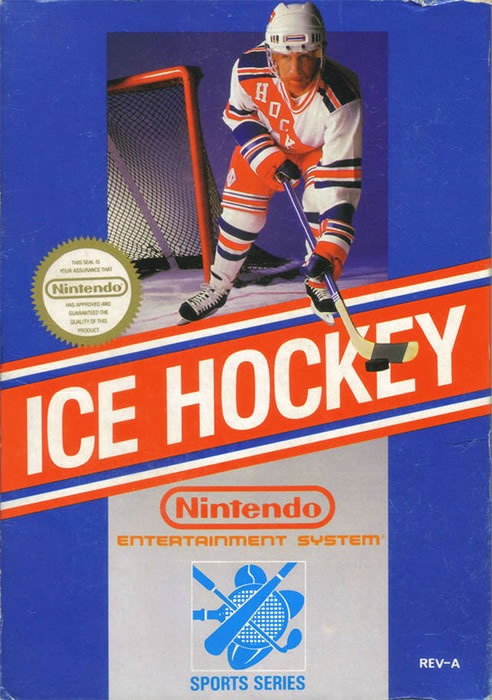
Ice Hockey
Nintendo Entertainment System
Nintendo
1988
Review Scores
| Publication |
Scores |
| Computer Entertainer |
3.25/4 |
| Electronic Game Player |
Hit |
| AVERAGE SCORE |
78% |
After launching with long-in-the-tooth sports games like Baseball and Tennis, Nintendo took their time when it came to adapting the sport of ice hockey. The result is a better and faster game than we were used to, really showing off how far the developers had come in the last few years. Computer Entertainer agreed, giving this 1988 sports game an average score of 3.25 out of 4. “While this is not ‘regulation ice hockey,' (Nintendo having taken some liberties with the actual rules of the game), it is loads of fun nonetheless. We especially like the ability to change your team's attributes, allowing for very varied play. The feel of the game is quite good, and you'll have fine control over your goalkeeper as you guard the net, able to move in and out to keep the puck out. The view is from high overhead, as the action is fast and furious on the ice below. We found this to be a highly satisfying hockey game, having played a few for the various home computer systems. It's a good addition to the Nintendo sports line.”
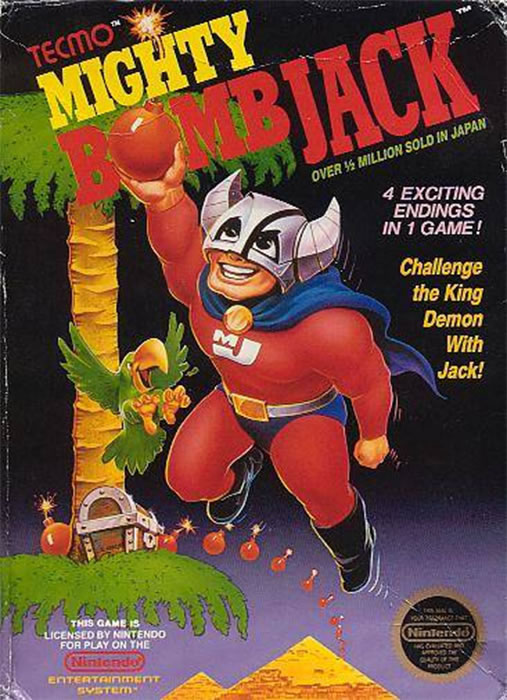
Mighty Bomb Jack
Nintendo Entertainment System
Tecmo
1987
Review Scores
| Publication |
Scores |
| Computer Entertainer |
3.75/4 |
| AVERAGE SCORE |
70% |
Released on the Nintendo Entertainment System in 1987, this Tecmo game is tough and frustrating and incredibly obtuse, but it still maintains a legion of fans who put in the time to (eventually) see the platformer's greatness. I have never been that impressed with Mighty Bomb Jack, but, clearly, I'm at odds with the critics at Computer Entertainer, who gave the game a strong average of 3.75 out of 4. “This game is loaded with nuances which you will continue to discover as you play the game. Action lovers will enjoy the fast-paced nature of the game, while also discovering treasures. As you become adept in moving Jack around with your controllers, you will find that you're able to send him flying, floating, jumping as you avoid the unpredictable enemies determined to annihilate you. The graphics are colorful, with terrific detail and showcase the Nintendo as a terrific alternative to the coin-eating arcades. The various characters and treasure items all have distinctive characteristics. Jack looks like a cross between Superman and Mighty Mouse. This is one of those tough, frustrating, ‘just one more time' games which will have you back for more and more!”
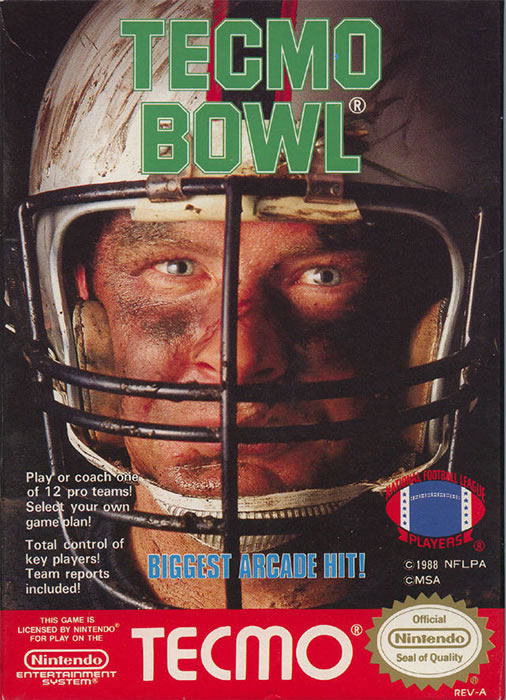
Tecmo Bowl
Nintendo Entertainment System
Tecmo
1989
Review Scores
| Publication |
Scores |
| Electronic Gaming Monthly |
Direct Hit |
| Computer Entertainer |
3.5/4 |
| AVERAGE SCORE |
94% |
Given that it was released at a time when magazines like Electronic Gaming Monthly, GamePro and Video Games & Computer Entertainment were taking up room on the newsstand, you would think that Tecmo Bowl would have garnered more coverage, but those early game magazines were a bit reluctant to review sports games. Thankfully, Computer Entertainer was there to pick up the slack, giving this 8-bit classic an average score of 3.5 out of 4. In a review that is comparing Tecmo Bowl to John Elway's Quarterback, they concluded that “the graphics on both games are pretty good. We have to give John Elway a slight nod in this department, as the players seem to be just a bit more ‘human' looking ... partially because of the point of view. There's some flickering, but there are many players moving so we must be forgiving of that. In the sound department, once again, Tecmo Bowl is the winner, with more varied music, grunts, shouts and a yell of ‘touchdown' when that happens. On the other hand, John Elway's Quarterback uses that familiar ‘charge' theme throughout the game. It becomes somewhat annoying after a while. Tecmo Bowl even has a halftime show for your amusement. So, if we haven't totally confused you (and ourselves), we definitely have to give the overall nod to Tecmo Bowl.”
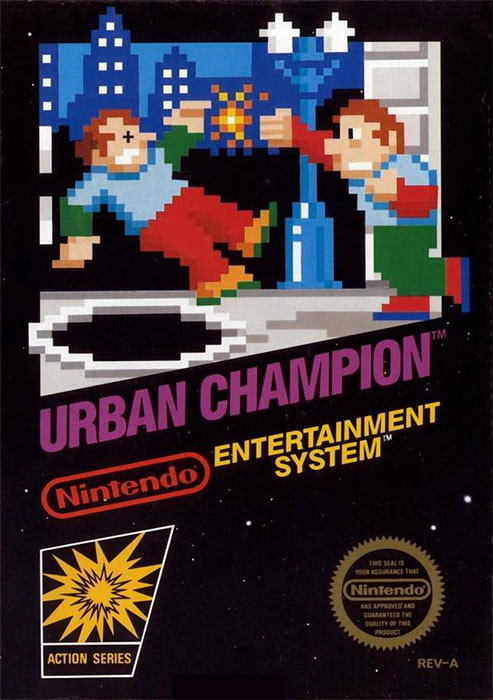
Urban Champion
Nintendo Entertainment System
Nintendo
1986
Review Scores
| Publication |
Scores |
| Computer Entertainer |
2.5/4 |
| AVERAGE SCORE |
63% |
It's easy to look back at Urban Champion as one of Nintendo's early duds. It's slow, sluggish, the characters suck and the one-on-one fighting isn't very deep. But this is coming after 34 years of hard-hitting fighting games. Could it be that, in a pre-Street Fighter world, this was hailed as one of the generation's best beat ‘em ups? No. That's not what happened. Computer Entertainer gave it a 2.5 out of 4. That may not sound too bad, but only 15 NES games scored lower than a 2.5. That's out of nearly 250 reviews. “Although fighting games are very popular with gamers at the moment, this one has little to recommend it. Urban Champion lacks the depth of play we've come to expect from Nintendo. The fighters have two kinds of punches, which can be aimed high or low, plus corresponding blocks. The moves are made against a background of shops on a city street, with an occasional falling flower pot to dodge. And that's about all there is to it. Although somewhat better as a two-player game than as a solo contest against the computer, neither version is likely to keep gamers coming back for repeated sessions. We rate this one a disappointingly dull slugfest.”
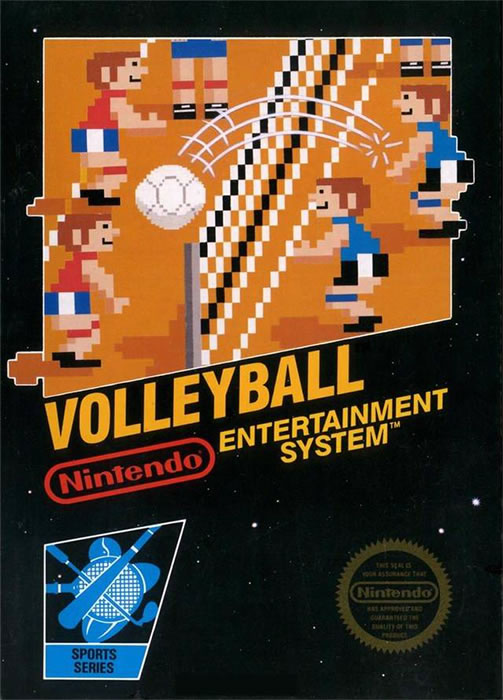
Volleyball
Nintendo Entertainment System
Nintendo
1987
Review Scores
| Publication |
Scores |
| Computer Entertainer |
3.25/4 |
| AVERAGE SCORE |
81% |
After conquering the baseball diamond and soccer pitch, Nintendo returned to the sports genre with the 1987 version of Volleyball. While barebones like many early-generation sports games, this one offers more depth to the gameplay than the rest. Believe it or not, the developers managed to squeeze the sport into a very playable (and surprisingly exciting) 8-bit cartridge. Computer Entertainer was yet again impressed, giving this simply-titled game a score of 3.25 out of 4. “Nintendo's Volleyball is the most feature-filled and realistic of any video volleyball game we've played. Much more than a fancy version of Pong, this volleyball game has all the excitement of an international match. In fact, the variety of moves and strategies possible in this game is so great that it takes quite a lot of playing time before you can master them all. Volleyball is not as popular a competitive sport in the U.S. as it is in many other countries. Playing Nintendo's video version of the game helps you understand why so many other countries take the game so seriously.”
On top of the games that previously didn't have any reviews, there were a handful of Nintendo Classics that only had one take when we last covered them. This meant that the only opinion being voiced was from Nintendo Magazine System, which offered up a short capsule review that was written several years after the games first came out. Not what I would call ideal, but you work with what you have at the time.
Now, with the Computer Entertainer issues adding so many more timely reviews, I wanted to take a moment to quickly update the scores. For example, when we add Computer Entertainer's review for Clu Clu Land, which they gave a 3 out of 4, we see the average jump up seven points, going from a 62% up to a 69%. We see an even bigger jump with the original Donkey Kong. Computer Entertainer gave the arcade port a score of 3.25 out of 4, raising the average from 40% up to 51%. Still too low, if you ask me.
One of the biggest winners of this adjustment is Donkey Kong Jr., which scored a 3.5 out of 4, increasing the score from 46% all the way up to 67%. That's a 21-point jump. Ice Climber also gets a big boost, which is appropriate. Computer Entertainer gave it a 3.5 out of 4, enough to see the average go from 58% up to 73%. That's pretty much the same bump we saw from Kid Icarus, which used to be at 68%, but is now at 81%, thanks to the magazine's near-perfect score of 3.75 out of 4.
One of the biggest increases we're going to see is Pro Wrestler, which jumped 22 points after adding in Computer Entertainer's 3.5 out of 4 score. That takes it from 45% up to 67%. Rygar, on the other hand, may have only gone up 15 points, but with a new average of 85%, I doubt anybody is complaining. That's the kind of boost a perfect 4 out of 4 will get you. Speaking of perfect scores, the generically-named Soccer got a 28 point boost when we added in Computer Entertainer's 4 out of 4 rating. It went from 45% all the way up to 73%. The final game we're going to talk about also has the second-highest boost. When we last covered Xevious, it was at 46%, but after mixing in the new score, it's up to 70%. Not bad.
Of course, this points out the flaw of covering some of these extremely early NES games. It's easy to look back on a game like Mario Paint, because there were a lot of magazines and every one of them covered it. But when it comes to something like Ice Climber or Urban Champion, there may only be one or two reviews. That's frustrating, but that's better than nothing. And that's what makes these Computer Entertainer issues so exciting. It helps to fill in some of the gaps in games journalism, giving us a very rare glimpse into reporting from that dark time in our history.
If you're interested in reading through the full archive of Computer Entertainer issues, I will leave a link to the Video Game History Foundation's website in the description box. This truly is a treasure trove of content, and you better believe that we'll be talking more about this long-running magazine in the very near future.